
Speaking
I help audiences explore the meanings and attachments people carry to places—from homes and neighborhoods to memorial landscapes and nations—and practice ways to build belonging, repair, and courageous conversation. Invite me to help your community see place, power, and each other anew.
- Spoken at 20+ conferences and events since 1996
- Onboard lecturer
- Guest/Visiting Lecturer
Participants were thrilled with Corinna’s presentation and our organization received many compliments on the depth of her knowledge.
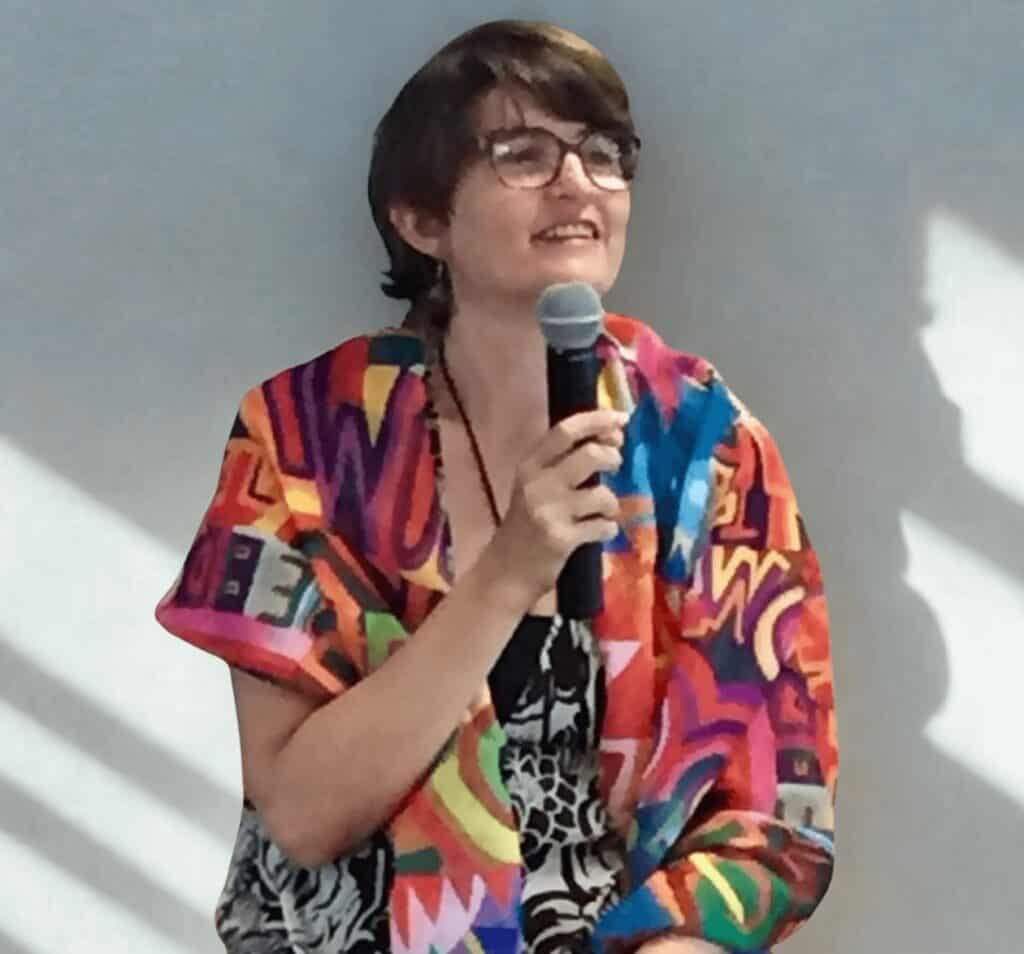
A hit with 230+ leaders; rigorous, candid, and clear.
Uplifting, connecting, energizing and transformative.




Magic Cities: Ritual, Power & the Places We Make
How meanings and power flow across/through places and borders—and how everyday sites become altared spaces that shape memory and action.
Program Details
Overview
Meanings and power flow through streets, parks, and rooms—charging them as altared spaces that shape memory and action. This talk traces how rituals (formal and everyday), public memory, and policy intertwine to normalize some stories while erasing others.
Using places around the world as examples, with a focus on Havana and Little Havana, we’ll look at how people re-orient them with care—and what small “re-altars” can do at any scale, from a doorway to a national plaza.
We’ll explore
- How attachments to place are made (and unmade) through symbols, ceremony, and repetition.
- The entanglement of race, empire, and public memory across the Americas.
- Ethical, doable practices for noticing power and inviting repair—without alienating people.
Participants leave with:
- A shared vocabulary for ritualized power, flows, and altared spaces.
- A quick set of questions to bring to any site (“Who is welcomed? What is repeated? What is absent?”).
- Examples of small “acts of repair” (hosted pauses, framing notes, route shifts) they can try tomorrow.
- A short resource sheet tailored to your context.
Formats & audiences
- Talk (30–45 min) • Talk + Q&A (60–75 min) • Guest lecture.
- Ideal for: universities, museums, humanities councils, civic & community orgs.
From Monuments to Altars: Rethinking Public Memory
Beyond plaques: how memorial landscapes become charged—and how communities can re-orient them with care, context, and participation.
Program Details
Overview
Beyond plaques and plinths: memorial landscapes are charged by the rituals around them. This talk invites audiences to see monuments as active sites where meanings flow—and where communities can host new practices that widen who is seen, welcomed, and remembered. We’ll move from “fix the text” to “illuminating relationships” with examples of low-cost, high-care interventions.
We’ll explore
- How commemoration, ceremony, and routine use turn space into altared public memory.
- Ways to add context without defensiveness (framing notes, counter-routes, dialogue prompts).
- The role of the arts and embodied approaches in broadening perceptions of public space.
Participants leave with:
- A gentle framework for assessing memorial sites (signals, stories, stewards).
- 3–5 practical options for re-orienting experience (before/at/after the site).
- Tips for hosting braver conversation across difference.
- A resource sheet with examples and planning prompts.
Formats & audiences
- Talk (30–45 min) • Talk + Q&A (60–75 min) • Guest lecture.
- Ideal for: museums, parks, cities, tourism/culture teams, educators.
Core-Respondence: Reconnecting to Place in Times of Change
A practice of listening, relating, and re-orienting to place in ways that nurture healing for yourself, your community, and the web of life.
Program Details
We are living through an era of profound disorientation — climate upheaval, migration, gentrification, and social fragmentation have unsettled our sense of home and belonging. Core-Respondence offers a practice for grounding and reconnecting, not by treating place as a fixed backdrop, but by entering into relationship with place as a living, relational field.
Drawing from cultural anthropology, ecology, and ritual practice, Core-Respondence helps us notice how place lives in us — in memory, ancestry, movement, imagination, and everyday experience. It offers tools for navigating thresholds, sensing patterns, and cultivating presence in times of uncertainty.
Participants explore:
- Portals and thresholds: how certain places, forms, and moments invite awareness, reflection, and transformation.
- Embodied practices: mapping, movement, storytelling, touchstones, and noticing exercises that deepen connection to place.
- Belonging without purity narratives: moving beyond “native vs. outsider” frameworks toward relational, reparative forms of being with place.
- Repair and reciprocity: recognizing what is centered or excluded in our landscapes and how to restore connection.
- Creative resilience: how humor, imagination, trickster energy, and improvisation open new paths in unsettled times.
Participants leave with:
- A renewed, inclusive language of belonging.
- Practices for finding orientation during personal or collective transitions.
- Tools for deepening connection to local landscapes and social ecologies.
- A way of imagining “home” as an evolving, relational practice — not a fixed point of origin.
Formats & Audiences:
- Talk (30–45 min) • Talk + Q&A (60–75 min) • Guest lecture
- Ideal for campuses, museums, libraries, community orgs, leadership programs, and public humanities initiatives.
Beyond “Placemaking”: Arts for Core-Respondence in Public Spaces
Move past make/keep binaries. Using arts as civic hosting in parks, plazas, libraries, campuses, and streets, we sense flows of meaning and power, invite dialogue, and re-imagine public spaces as altared—not fixed—sites of relation and shared care.
Program Details
Overview
This session reframes placemaking/placekeeping through Core-Respondence: public space as relationship, not a fixed object. We use arts to host encounters that surface attachments, tensions, and flows of meaning and power across parks, plazas, libraries, campuses, waterfronts, and civic corridors. Instead of “fixing” places, we practice repairing our relations with them and with one another—recognizing altared spaces, contested histories, and mobile publics shaped by migration, policy, and memory.
We’ll explore
- Arts as civic hosting in public space (openings/closings, consent cues, multilingual & sensory signals).
- Beyond “make/keep”: relational placework across scales and borders without erasing stewardship.
- Case studies of public spaces/projects that embody aspects of the Core-Respondence approach.
- Approaches for threatened/lost spaces: How groups are using the arts to engage with public spaces threatened by over-development, over-tourism, climate events, etc.
Participants leave with
- A Core-Respondence framework for public space (before • during • after).
- A menu of 5–7 arts-based dialogue practices (5–20 min each) tuned to outdoor/semi-public settings.
- An inclusion & safety checklist (access, language, weather plans, photography consent, aftercare).
- A simple way to track relational outcomes (stories, repeat ties, partner pathways), not just headcount.
Formats & audiences
- Talk (30–45 min) • Talk + Q&A (60–75 min) • Guest lecture.
- Ideal for: arts councils, cultural affairs, libraries, museums, parks departments, Main Streets/DMOs, BIDs, campuses, planning/public health/mobility teams, community orgs.
Walking as Method: Designing Transformative Site Encounters
Design site visits that are ethical, accessible, and alive to flows of meaning—from domestic spaces to streets and memorials.
Program Details
Overview
A walk can be extractive—or transformative. This talk shares principles for designing site encounters that are ethical, accessible, and alive to flows of meaning. We’ll consider domestic interiors, neighborhoods, campuses, and memorial landscapes, with attention to consent, pace, and care.
We’ll explore
- Pre-work (intent, route, access), on-site hosting (tempo, voice, choice), and aftercare (debriefs, returns).
- Safety, consent, and sensory needs as design—not add-ons.
- How to frame difficult histories without retraumatizing or sanitizing.
Participants leave with
- A route design checklist (signals, stops, sequences, seats/shade).
- Scripts for opening/closing, content notes, and invitations to pause.
- A matrix for group size vs. method (pairs, clusters, solo moments).
- A simple evaluation/learning capture form.
Formats & audiences
- Talk (30–45 min) • Talk + Q&A (60–75 min) • Guest lecture.
- Ideal for: educators, museum & heritage staff, conference planners, civic orgs.
Inclusive & Regenerative Tourism: 12 Principles in Practice
Move from extraction to relationship: tourism that honors attachments to place and circulates benefits in the local web of life.
Program Details
Overview
Tourism can extract from places—but alternatively, it can deepen relationships and support regenerative systems. Drawing on my “12 Principles,” this talk shows how to design experiences that honor local attachments and circulate benefits in the web of life. We’ll translate values into decisions about stories, partners, routes, and place, with examples from cultural districts and small operators.
We’ll explore
- Moving from “sites to be consumed” to places in relation (people, ecologies, economies).
- What changes when you center accessibility, consent, and co-creation.
- Simple audits: story sources, time use, local stewardship, and revenue paths.
Participants leave with:
- A clear version of the 12 Principles of Regenerative Tourism.
- An audit checklist they can apply to one tour/site immediately.
- 3 “next quarter” moves (one programming, one partnership, one care practice).
- A resource sheet with caselets and metrics ideas.
Formats & audiences
- Talk (30–45 min) • Talk + Q&A (60–75 min) • Guest lecture.
- Ideal for: DMOs, tour companies, cultural sites, Main Streets, city/county teams.
Dr. Moebius is a captivating speaker who weaves scholarship, activism, and storytelling into a powerful message that both inspires and challenges audiences to think deeply and act courageously.
Stephanie Jones
CEO
Disrupt for Change, LLC
Recent Venues
- Power of Partnership Stewardship Summit: 200 travel and tourism professionals to explore the intersection of culture, community, and climate)
- ArtServe Live Cultural Convo: live-streamed talk on finding solutions through the power of art activism
- American Cruise Lines: On-board lecturer on history and culture of Florida
- Community Reinvestment Alliance Annual Summit: 230 non-profits, financial institutions, elected officials, government staff and community leaders
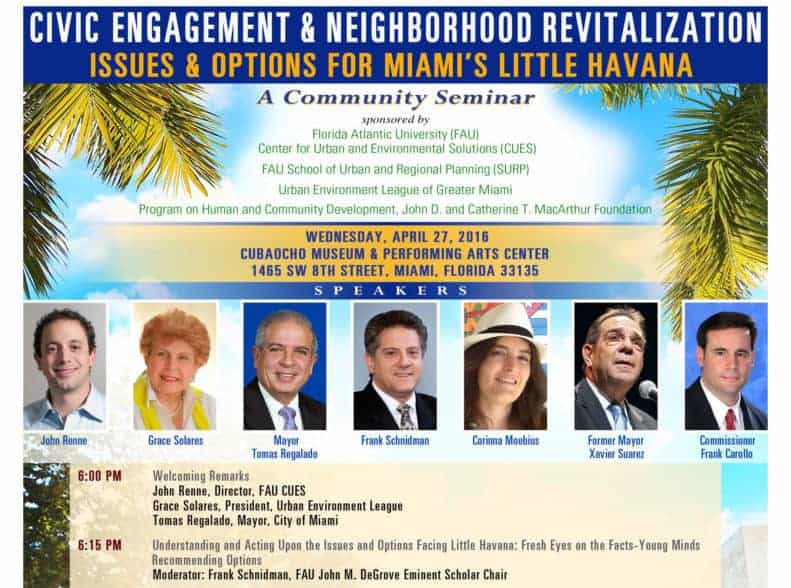
- History of Cuba & the Cuban American Experience Summit: for Miami-Dade Public Schools
- Road Scholar: Guest Lecturer on history of Miami’s Overtown neighborhood
Speaking FAQ
- Do you customize talks?
Yes. I schedule a pre-event call to learn your aims, audience, and place context; I weave in local examples and provide a short resource sheet. - What formats do you offer?
Talks (30–60 min), guest lectures, key sessions with Q&A, moderated conversations, and panel participation. Workshops and walking/site visits are on the Workshops page. - AV & room needs?
HDMI or clicker-friendly setup, handheld or lav mic, ability to show short clips, and water. I can deliver with minimal tech if needed. - Virtual delivery?
Yes—Zoom/Teams with built-in interaction. I provide caption support and share accessible slides afterward. - Accessibility practices?
Content notes for sensitive material, plain-language slides, slower pacing with pauses, and attention to mobility and sensory needs. - Rates & budgets?
Scoped to size and goals; nonprofit and educational rates available. Tell me your range and I’ll propose options. - Can this include a site visit or walking component?
Absolutely—group size, route, and accessibility are planned in advance; see the Workshops page for details.